Project Source Codeby monoed.africa

For computing and engineering students

Final year project source code, built for your topic.

Type your topic and get a working system in Python or PHP, or an Arduino program with its circuit, that you can run, show and defend. It comes with a guide to your own code and likely defence questions.

  • Runs on your laptop, no internet needed
  • A guide you can defend from
  • See the plan before you pay
code.monoed.africa1 of 5

Step 1

Type your topic

Your topic, department and school. Free to start.

Topic

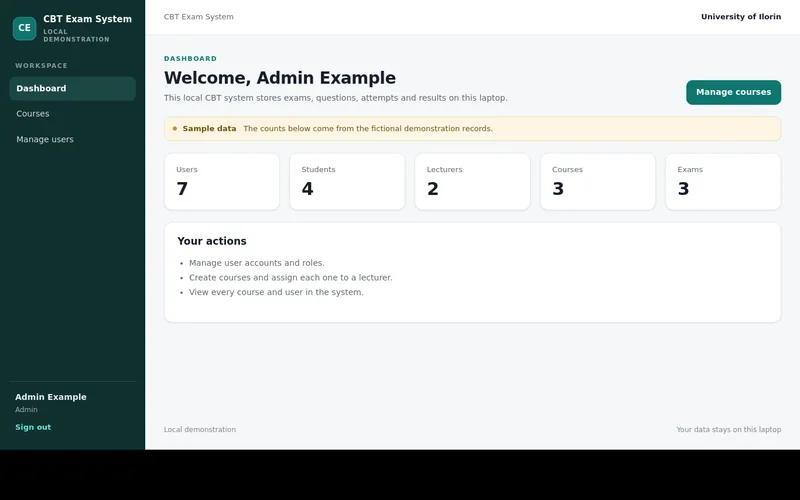
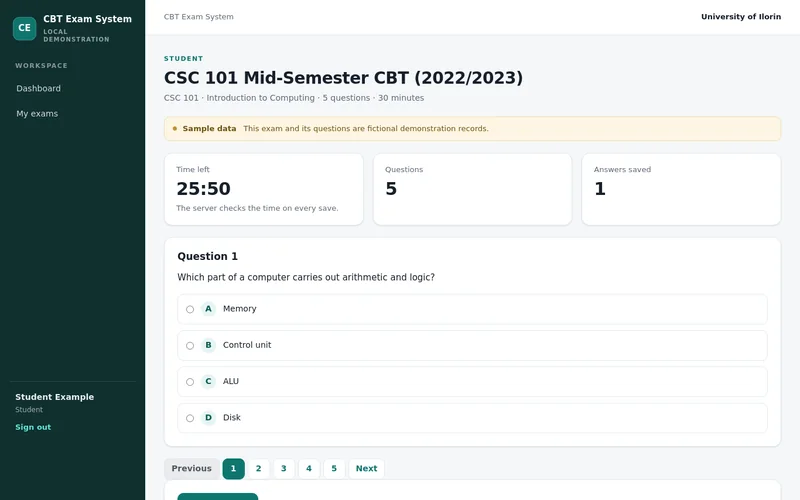
Design and Implementation of an Online Examination (CBT) System

Department

Computer Science

Institution

University of Ilorin

Continue

How it works

Four steps. You see the plan before you pay.

  1. 1

    Tell us the topic

    Type it as your department approved it, with your department and school. This part is free.

  2. 2

    Answer a few questions

    Who uses it, what it records, Python or PHP. Each one has a suggested answer.

  3. 3

    Check the plan and pay

    Review the users, features, screens, data and what is left out. Pay only after you approve the plan.

  4. 4

    Download a project that runs

    Most are ready 10 to 40 minutes after payment. We email you when it is.

What you get

Everything you need to show, explain and defend your system.

The code

A system built for your topic, in Python or PHP. Plain code you can read, with every query in the open.

A guide to your system

The big picture, three actions followed through the code, every table and every file, with diagrams.

Defence questions

Twenty likely questions with short answers that name your own files and functions.

Screenshots

Every main screen, sized and captioned for Chapter 4 of your report.

Run instructions

Step by step for a Windows laptop, with fixes for common problems and how to put in your own data.

Three change requests

Supervisor wants something different? Say it in plain words. That part is reworked and tested again.

Topics it can build

Your topic does not need to be on a list. These are the kinds of system it builds well.

See all 110 example topics

Python or PHP. You choose.

Pick the one your department taught, or let us choose for your topic.

Python

Flask and SQLite

  • Starts with one double-click on run.bat
  • The database is one file in the project folder
  • Best for prediction, machine learning and spreadsheet topics
  • Has a 30-minute online copy to click through

PHP

Plain PHP and MySQL, in XAMPP

  • Copy the folder into htdocs and open the setup page
  • Show your tables in phpMyAdmin at your defence
  • No framework, so every page is one readable file
  • Written for PHP 7.4 and newer

Not sure? Read how to choose, or see Python projects and PHP projects.

Checked before it reaches you

A project that fails any of these is not delivered.

  • Installed from scratch on a clean machine, the way you will install it
  • Its own automated tests are run, at least one for each feature
  • Every screen is opened as the right kind of user and must load without errors
  • Sample data is labelled as sample data, and you can replace it with your own

Arduino and microcontroller topics too

For “design and construction” topics in Computer Engineering and Electrical and Electronics. It gives you a tested starting point: a program that compiles, with rules that have been tested, and a circuit you can follow. An Arduino Uno program is also run on a simulated board.

  • The program for an Arduino Uno
  • The parts list, and every wire in a table and a drawing
  • Files to try your circuit on the free Wokwi simulator before you buy a part
  • A guide, build instructions and twenty defence questions

You buy the parts and build the circuit yourself. We do not build or post it, and we cannot test your real circuit.

See Arduino topics
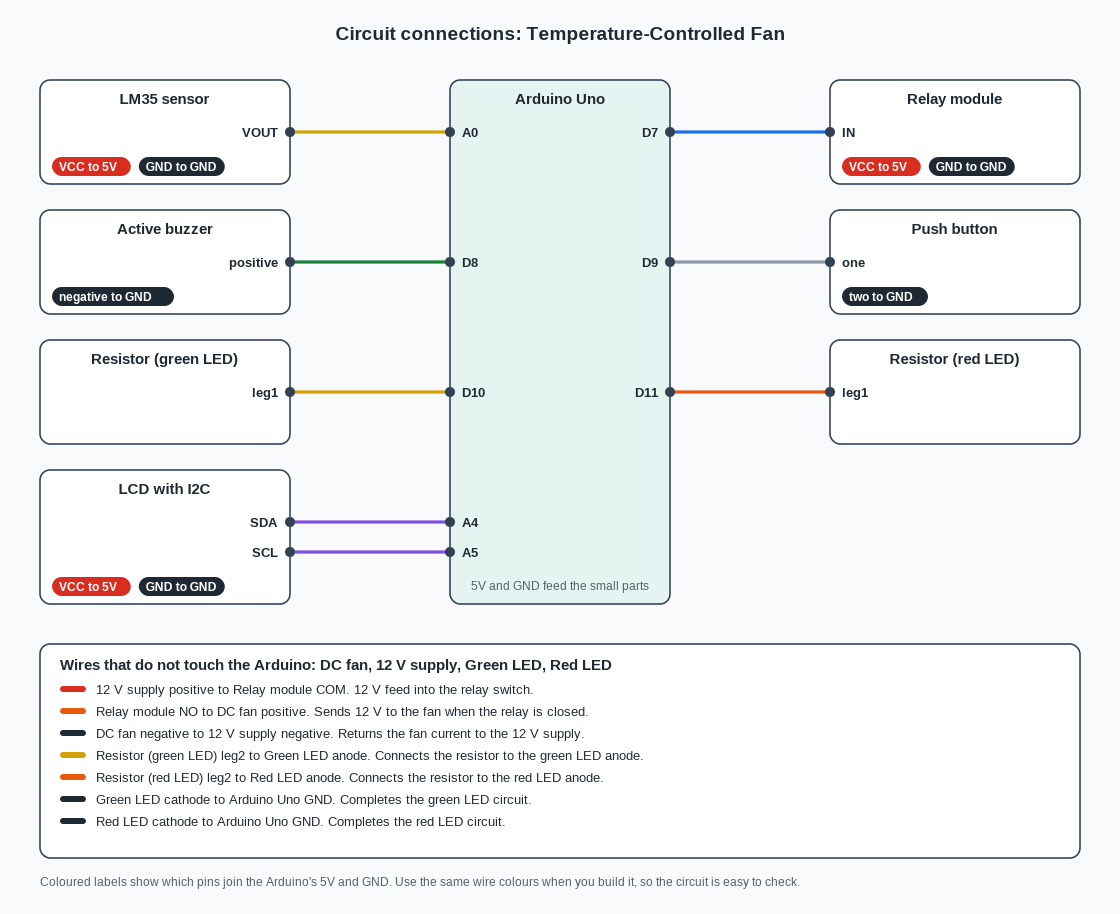
A drawing of every wire between an Arduino Uno and the parts of a temperature-controlled fan
The wiring drawing from a temperature-controlled fan project.

What the finished system looks like

Real screens from systems the builder has made. Yours is built for your own topic.
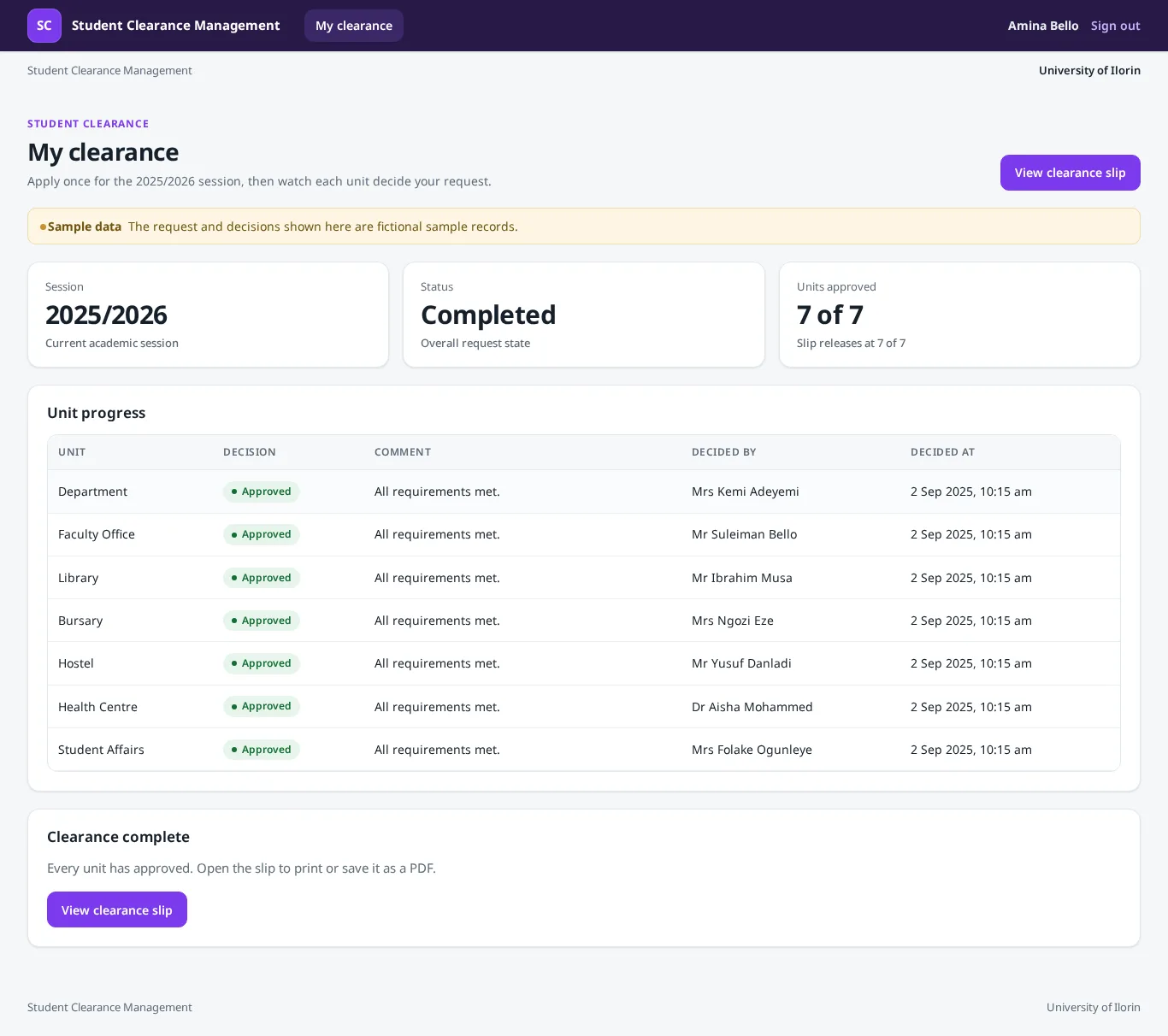
A student's clearance page showing seven units approved
Python: a student clearance system. Each unit approves in turn, then the slip is released.
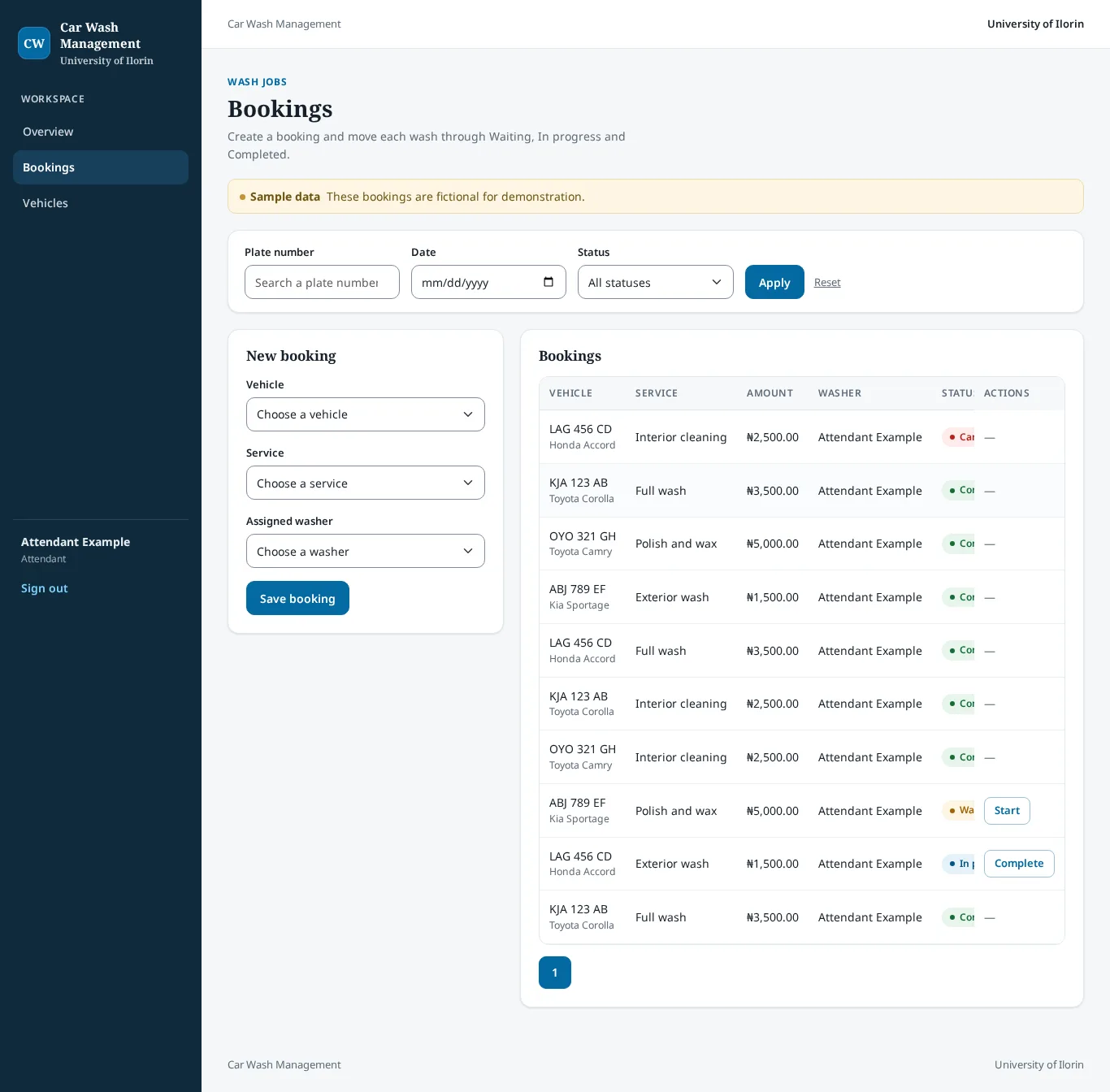
A car wash bookings page with a form and a list of jobs
PHP and MySQL: a car wash system with bookings, payments and a daily report.
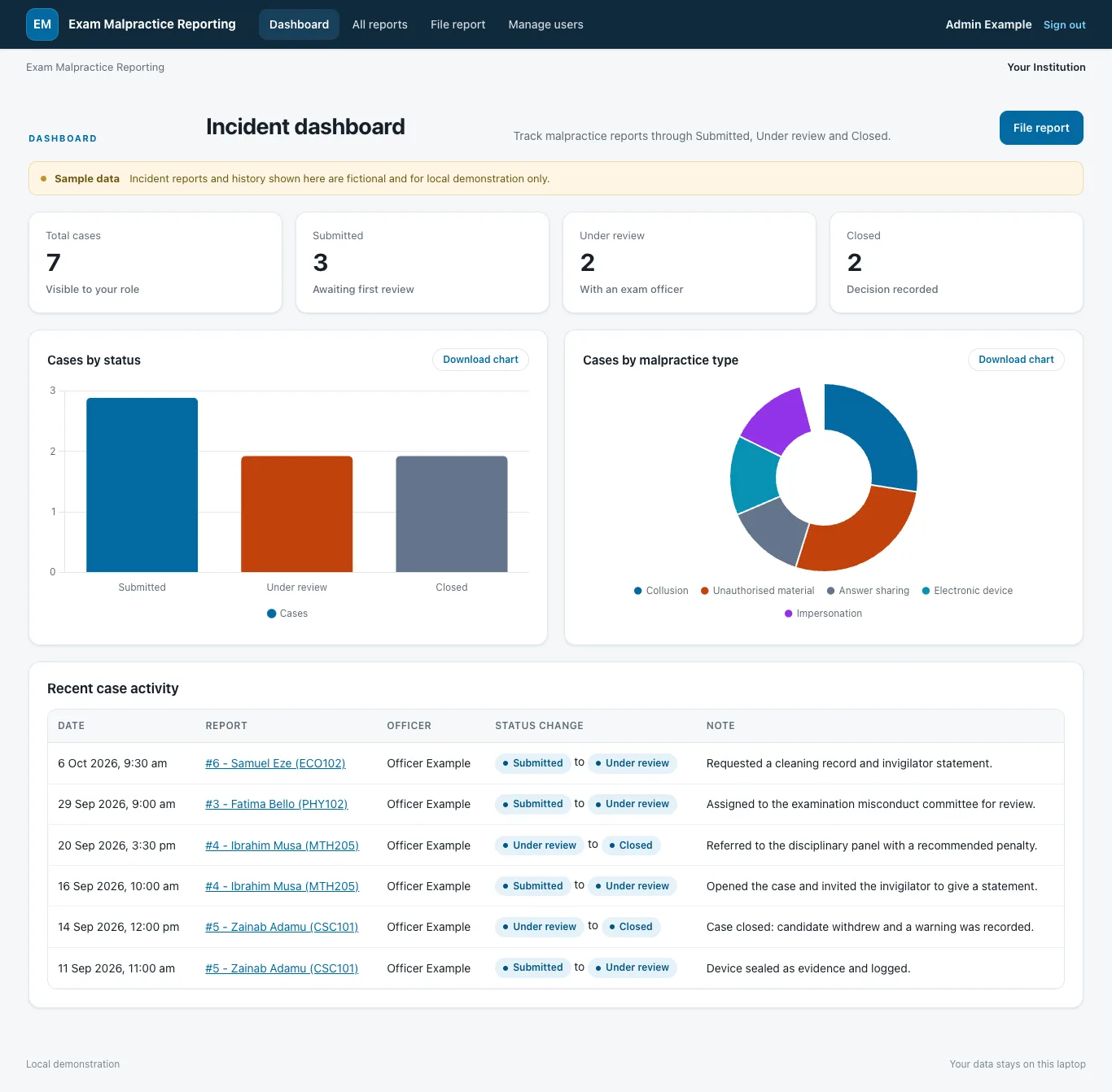
A dashboard of exam malpractice cases by status
PHP and MySQL: reporting and reviewing exam malpractice cases, with an audit trail.
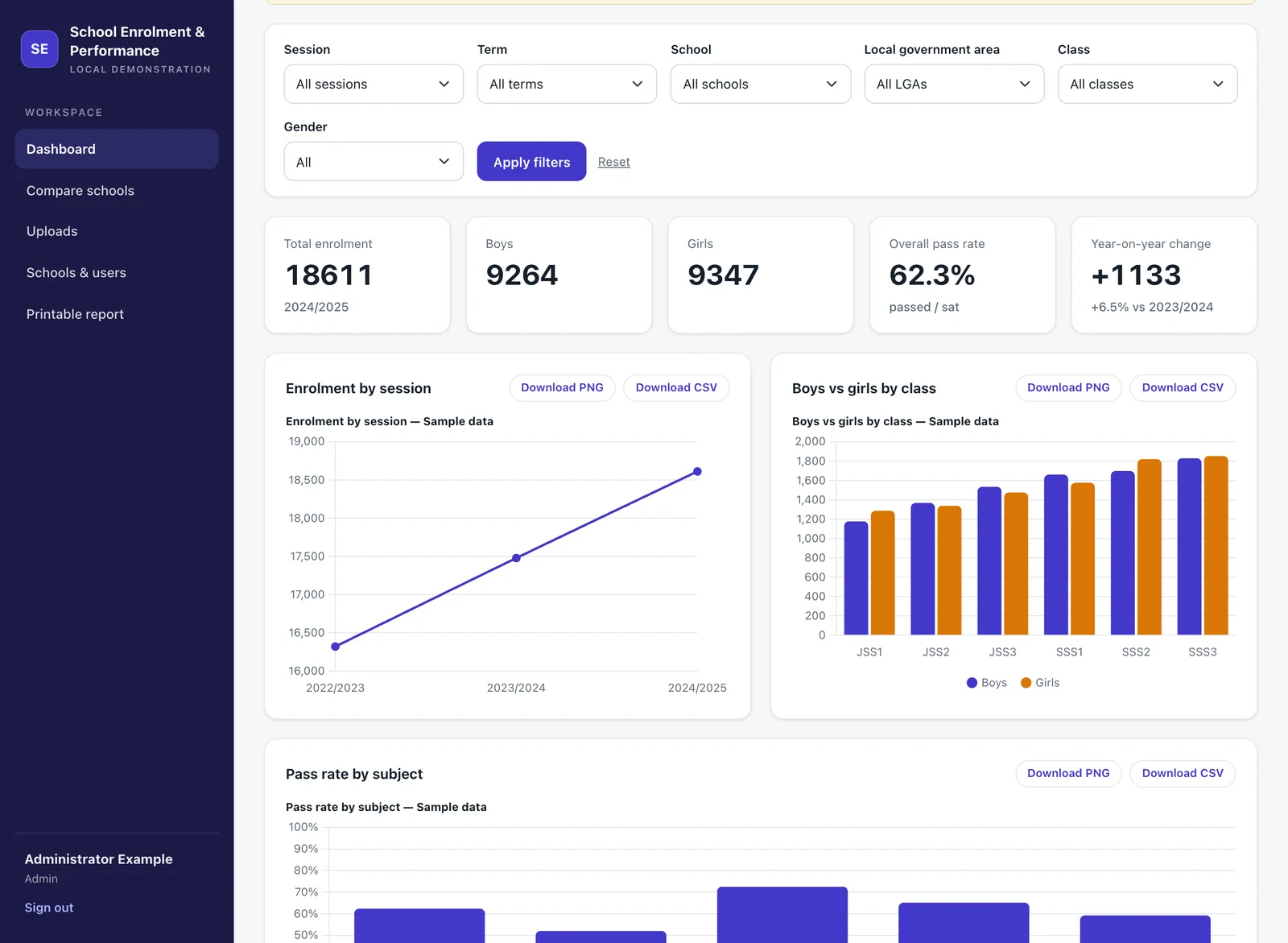
A school enrolment dashboard with headline figures and two charts
Python: a dashboard that reads uploaded spreadsheets and draws the charts.

Press a picture to see the whole system: its users, features, database tables and tests.

One price for the whole project

You see the plan first. You pay only if you want it built.

Before you pay

₦0

No card needed to start

  • Type your topic, department and school
  • Answer the questions about your system
  • Read the full plan: users, features, screens and data
Start free
Everything for your defence

Your project

₦13,500₦45,000

Paid once, after you approve the plan

A developer usually charges ₦40,000 to ₦50,000 for a system like this, and takes weeks.

  • Working source code built for your topic, in Python or PHP
  • A guide that explains every file, as PDF, Word and text
  • Twenty likely defence questions, with answers
  • Screenshots of every screen for Chapter 4
  • Read all the code on the site before you download
  • A 30-minute online copy to click through (Python projects)
  • Three change requests after you get it, for when your supervisor asks for something different
  • Help from our team on WhatsApp if something is not right
Start with your topic

Most projects are ready 10 to 40 minutes after payment.

Questions

What do I get?
Working source code built for your own topic, a guide that explains every file, twenty likely defence questions with answers, run instructions, and screenshots of each screen for Chapter 4. The guide, questions and instructions come as PDF, Word and text files.
Is it only for Computer Science?
No. It is for any department whose project is a software system or a small microcontroller device: Computer Science, Information Technology, Software Engineering, Cyber Security, Information Systems, Computer Engineering, Electrical and Electronics Engineering and others, at university or polytechnic, for BSc, HND and ND.
Which topics can it build?
Record and management systems, booking and sales systems, CBT and school systems, dashboards, expert systems, prediction systems, security tools, and small Arduino devices. It does not build mobile apps or network simulations. Real payments and SMS are simulated and labelled.
Can it build Arduino or other hardware projects?
Yes, for small devices built around an Arduino Uno: sensors, a display, a buzzer, LEDs, a relay. You get the program, the parts list, the wiring and files for a free simulator. You buy the parts and build the circuit yourself; we do not build or test your real circuit. It does not do Wi-Fi, GSM, fingerprint, robots or mains voltage.
Which language is it written in?
For software you choose: Python with Flask and SQLite, or plain PHP with MySQL for XAMPP. If you are not sure, pick Choose for me and we use the one that suits your topic. No Java, and no framework you would struggle to explain. Microcontroller projects are written in Arduino C++.
Does it work without internet?
Yes. After it is installed on your laptop it needs no internet, so it works on defence day whatever the network is like.
Can I put in my own data and my school's name?
Yes. It comes with labelled sample data so every screen has something to show. The run instructions explain how to remove it, add your own records, and change the name shown on the pages.
How long does it take?
Most projects are ready 10 to 40 minutes after payment. You can close the page and come back.
How much does it cost?
₦13,500, paid once. You answer the questions and read the full plan before you pay anything.
What if my supervisor asks for a change?
Open your project and write what should change, in plain words. That part is reworked and tested again, usually in 10 to 20 minutes. You can do this three times. If a change cannot be made, your project stays as it was and that request is not counted.
Will I be able to defend it?
That is what the guide and the defence questions are for. Read them, run the system yourself and try the three small changes the guide suggests before your defence.
How is my project built?
Your topic and answers shape a project plan. Our workflow uses AI to generate code and documentation, then runs checks before delivery. You receive the source code, a guide and the recorded test results so you can inspect and understand your system.
What should I check before submitting?
Run the system, read the guide and check the results yourself. Follow your institution’s rules on outside assistance and disclose the AI assistance when you submit or defend the project. The guide helps you prepare; it does not guarantee approval.
Does it write my chapters?
This site builds the software. The MonoEd FYP Generator at fyp.monoed.africa writes Chapters 1 to 5, and with the same Google account it can write Chapters 3 and 4 from your finished system: its users, tables, screenshots and test results.

For the written chapters, use MonoEd.

Guides

Short reads on choosing a language, running your project and defending it.

Start with your topic. It is free until the plan.

Start with your topic